
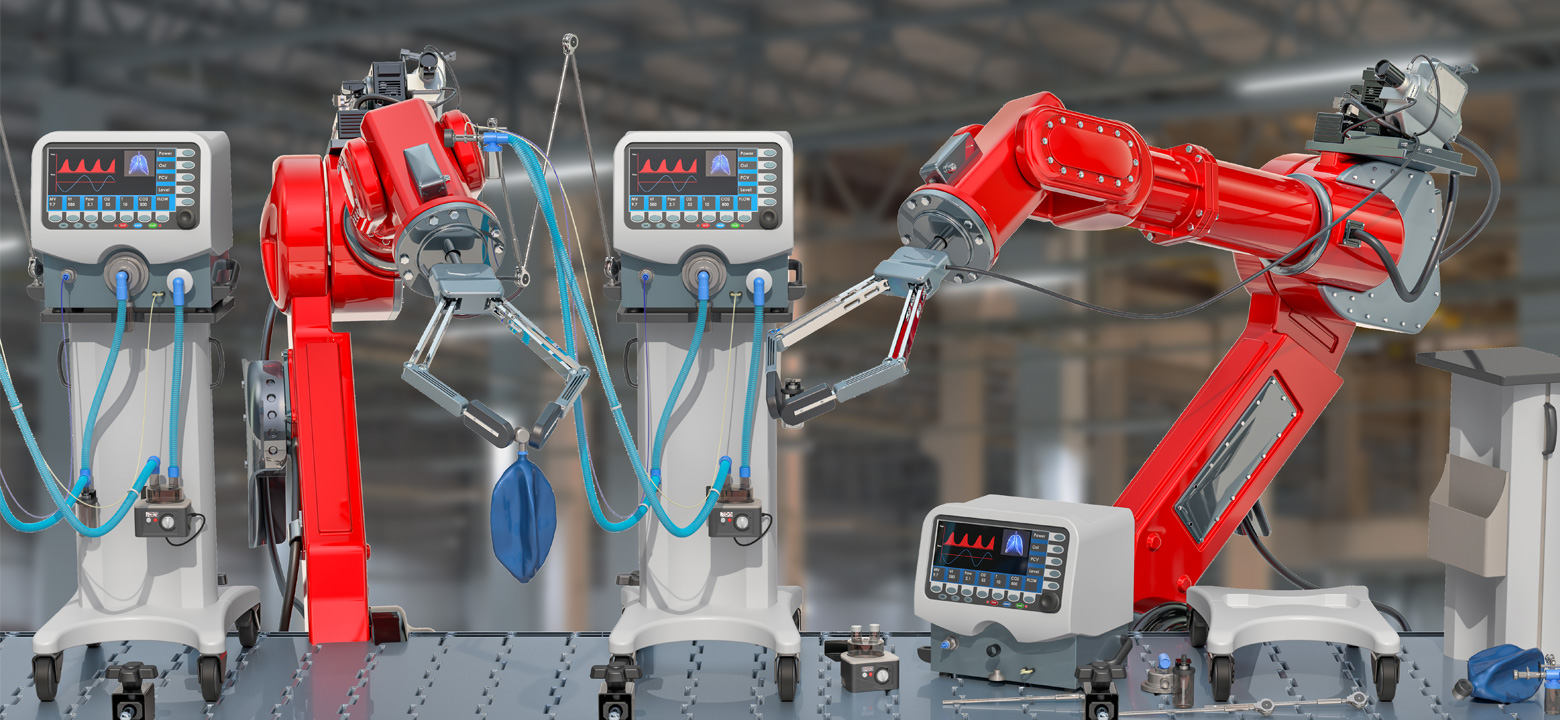
India has the world’s largest generic pharmaceuticals industry, supplies over 60% of global vaccine doses, and is home to some of the most sophisticated hospital networks in Asia. It is also a country where public health expenditure sits below 3% of GDP, where doctor-to-patient ratios in rural districts border on the inadequate, and where a significant share of medical devices — from stents to imaging equipment — are still imported.
This is the central paradox of Indian healthcare: a nation that manufactures for the world but has not yet fully built for itself.
That gap, which has widened over decades and sharpened sharply under the stress of the pandemic, is now one of the most compelling investment propositions in the emerging market universe. Not because it is new — advisors and policymakers have spoken about it for years — but because the policy architecture, the capital formation environment, and the industrial capability to close it have only recently converged.
The Scale of the Gap
The numbers are instructive. India has approximately 0.9 hospital beds per 1,000 people, against a WHO benchmark of 3. Its physician density is among the lowest for a country of its income level and urbanisation rate. In tier-2 and tier-3 cities, and across the rural hinterland, the infrastructure deficit is more pronounced still — not just in beds and doctors but in diagnostics, cold-chain logistics, and the availability of specialist care.
On medical devices, the dependency is striking. India imports roughly 75–80% of its medical device requirements by value. High-value capital equipment — MRI machines, CT scanners, linear accelerators — is almost entirely import-dependent. Even in mid-value segments like surgical instruments and consumables, domestic manufacturing has historically struggled to compete on precision and certification.
The pharmaceuticals picture is more nuanced. India is a global manufacturing hub for APIs and generic formulations, and that capability is genuine. But the country’s dependence on Chinese API imports — which came into sharp relief during supply disruptions in 2020 and 2021 — exposed a fragility within the export success story. Building true end-to-end pharmaceutical sovereignty requires domestic upstream capacity that does not yet fully exist.
“Healthcare manufacturing is not a policy bet — it is a structural play on import substitution, with favourable economics and a large, growing, and underserved domestic market.”
Why Now
The confluence of factors creating a genuine investment window is not accidental. It reflects a deliberate policy shift, a changed geopolitical environment, and a maturation of domestic capital markets that together make healthcare manufacturing an asset class worth serious attention.
Production Linked Incentive schemes have been the most significant policy lever. The PLI scheme for pharmaceuticals, launched in 2020 and extended in subsequent years, provides financial incentives for incremental domestic production of bulk drugs, medical devices, and complex generics. Early uptake was measured, but commitments have grown as manufacturers — both domestic and multinational — recalibrated their supply chain strategies post-pandemic. The scheme for medical devices, running in parallel, has begun to catalyse investment in segments that previously had no domestic manufacturing base whatsoever.
Geopolitical supply chain restructuring has reinforced what policy started. Global pharmaceutical and medical device companies are under pressure — from governments, investors, and their own boards — to reduce single-country concentration risk. India, with its established regulatory track record, its English-speaking scientific workforce, and its cost structure, is a natural beneficiary of the China-plus-one strategy now embedded in most multinational supply chain planning. This is not a speculative trend — contract manufacturing enquiries and greenfield announcements in Indian pharmaceutical and device clusters have accelerated materially since 2022.
Domestic demand growth provides the fundamental underpinning. India’s middle class — by most definitions already exceeding 300 million people — is ageing, urbanising, and developing the non-communicable disease burden that accompanies both. Diabetes, cardiovascular disease, and cancer are the defining health challenges of India’s next two decades, and each of them drives sustained demand for diagnostics, devices, pharmaceuticals, and specialist hospital infrastructure. This is not a cyclical demand story. It is structural, long-duration, and largely uncorrelated with global economic cycles.
The Larger Picture
India’s healthcare infrastructure gap is not a problem that capital alone can solve. It requires policy sustained over decades, workforce development at scale, and institutional reforms that are slow-moving by their nature.
But the investment case does not depend on solving the whole problem. It depends on the gap being large enough, the policy environment supportive enough, and the demand durable enough to generate returns within the capital cycle of a serious institutional investor. On all three counts, the case stands.
What is different now from five or ten years ago is the seriousness of the industrial intent. The PLI schemes, the supply chain pivot, the maturation of domestic hospital groups — these are not features of an emerging story. They are the features of a story that has already begun, where the question for investors is no longer whether to pay attention, but how to enter with appropriate rigour.
India is not building healthcare manufacturing infrastructure because it has run out of other things to do with capital. It is building it because the alternative — continued import dependency in a strategically critical sector, combined with an ageing population and a swelling disease burden — is a risk no government serious about economic sovereignty can accept.
That alignment of national interest and investor return, when it is genuine, is where the most durable infrastructure opportunities tend to live.